NEARI-meet arrives in University College Dublin (UCD)!

Our first ever NEARI-meet in UCD will take place on Saturday morning next, 16 September at 10.15 am. It will be PACKED with people sharing the story of their learning, from their  reflections and research on their practice, in our Round Robin sessions. Everyone will have the opportunity to engage in dialogue and to question assumptions!

Our theme for this meeting is: ‘Validity in Action Research’. This discussion will be led by Dr. Caitriona McDonagh.

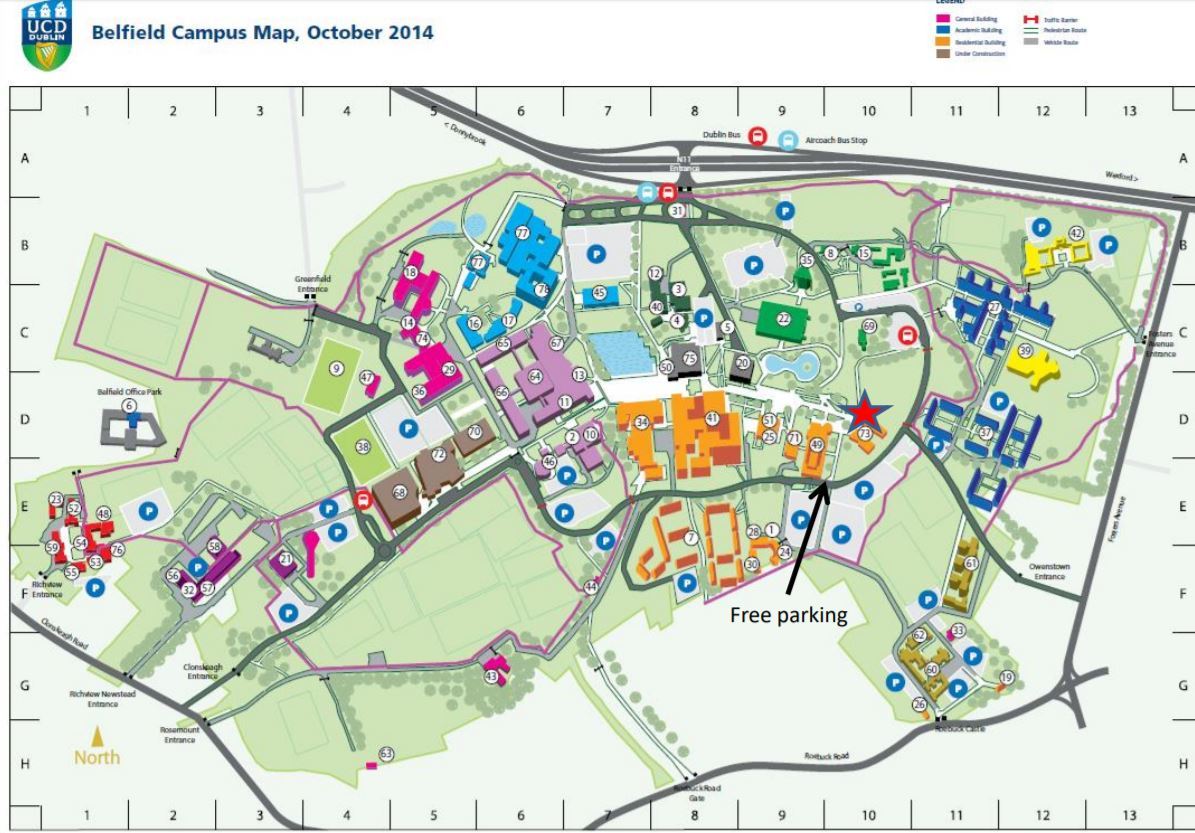
Our meeting will take place in the Sutherland School of Law, Belfield campus, see Building 73 on the map below.

Details and bookings at info@eari.ie

Hegemony in the library

Recently I have been reflecting on Schön’s ideas around ‘reflection-on-practice’ (1983) and trying to come to grips with what it means to ‘critically reflect’. In general, I am enjoying the process as I read my books and discuss the ideas with my friends and colleagues both here at EARI and NEARI and with others besides.

However, I do feel a certain sense of frustration, when it comes to accessing good, up-to-date literature on critical reflection. As an ordinary, practising teacher I have limited access to any academic libraries and therefore, sourcing literature is a problem. As a paid-up member of the Teaching Council of Ireland (the professional standards body for teaching that promotes and regulates the profession), I am entitled to limited access to EBSCO, for which I am hugely grateful. But, access is limited. It is very frustrating when I search for a paper on a particular topic, and find that while it may be listed on ‘our’ version of EBSCO, it is not available to view or download for us ordinary teacher, especially those who wish to adhere to copyright legislation.

I decided I would try to do something about my dilemma: I would become a member of an academic library and pay whatever fees were required to gain access to a library and online journals.

Readers, you can imagine my delight when I discovered that I could become an alumni member of my old alma mater; visit the library; read the books and even, believe it or not, access online journals! However, my joy quickly evaporated as I came to learn that I could not borrow any books; could not access the online journals from home; could not bring my laptop into the library to access online journals nor even print any sections from journals accessed from within the building!

As I returned discontentedly (and crankily) to my own pile of bought books and slightly out of date academic papers, Chomsky’s words around an education system that keeps ‘people from asking questions that matter’, (Chomsky 2000, p.24) came to mind. I wondered how I could reflect on my practice; question any underpinning assumptions regarding my practice; and become a critical thinker, unless I had adequate access to the literature. I speculated about how educators are expected to keep abreast of current thinking in education, unless they can access current journals. I wondered if my exclusion from online libraries was more than just a major inconvenience, or was something more sinister afoot.

Freire (2003) believed that issues of power, oppression and culture existed in many aspects of education, and he sought to unravel their existence and I began to think that, perhaps, I too am a victim of power and oppression in a culture that presumes that educators do not need to read. The word ‘hegemony’ floated into my thoughts. Gramsci (1971) has been instrumental in developing our understanding of ‘hegemony’ and Brookfield described it as: ‘The assumptions we accept unquestioningly as commonsense are sometimes the same ones that have been constructed by a dominant group or class to keep us servile and marginalised’ (2009: 295). Brookfield suggests that for reflection on practice to be critical, it needs to call power relations and hegemonic dimensions into question.

So I began to ask myself some questions (that matter) as I reflected critically:

I wonder why we think it is acceptable for educators to have limited access to the literature on education?

I wonder who makes up the rules for academic libraries?

Who really thinks it is good for us to be excluded from academic libraries?

Who are the powers-that-be that benefit from a teaching population that is not allowed access to current thinking in education?

Why is this situation acceptable to (nearly) everyone?


Brookfield, S. (2009) ‘The concept of critical reflection: promises and contradictions’, European Journal of Social Work, 12:3, 293-304

Chomsky, N. (2000) Chomsky on Miseduation, Oxford: Rowman and Littlefield

Freire, P. (2003) ‘From Pedagogy of the Oppressed’ in A. Darder, M. Baltodani and R.D. Torres, (eds), The Critical Pedagogy Reader, London: RoutledgeFalmer, 57- 68

Gramsci, A. (1971) Selections from the prison notebooks. Ed. Q. Hoare and G.N. Smith. London: Lawrence and Wishart.

Schön, D. (1983) The reflective practitioner: How professionals think in action. New York: Basic Books.

Network for Educational Action Research in Ireland

Would you like to join us for the inaugural meeting of the Network for Educational Action Research in Ireland?

Share in the Magic of Action Research — an opportunity to network and meet up with others of an ‘action researcherly’ disposition in the informal, relaxed setting of the Interfaith Centre, Dublin City University on 25th April, from 10.30 to 2.30. Map shows Centre as M just by grassed lawns in middle, at http://www.dcu.ie/sites/default/files/campus_map_large.jpg

You are invited to network with action researchers who are new to action research, who are working on action research projects and who are life-long action researchers. This is a cross sectoral group with Primary, 2nd Level and Further Education participants.

The aim of this group is

  • to contribute to the greater good and growth of educational knowledge by sharing our research stories
  • to provide encouragement and support for action researchers in conducting rigorous and evidence based work,
  • to provide opportunities for personal and critical engagement through networking and resource sharing,

What you can expect to do on the day

10.00   Meet and greet with refreshments

10.30   Introduction to NEARI its aims and how it might work

11.30   Networking: sharing stories of research and learning

12.00   Town Hall Discussion. This is an open forum for all present to chart a way forward for our    group with questions such as how do we identify, consolidate, support and promote areas of strength

13.00   Light Lunch

13.30   Resource Sharing – e.g. blogs online, journals and networks – global map

14.00   Planning next network meeting

14.30   Close

Email Pip Ferguson on pip.ferguson@dcu.ie by 5pm on 17th April to reserve a seat. (Places limited)

Enrolment Form please Pip Ferguson on pip.ferguson@dcu.ie

Name
Email
Institution (if any)
Level: Primary/ 2nd level/ Further/ other
Particular interest in or work done in action research, if any?

 
Download our flyer at http://www.eari.ie/NEARI.pdf


Mary Roche makes the UKLA 2015 Award shortlist!

We are delighted to share the news that our colleague, Mary Roche, is on the shortlist for the prestigious UKLA Academic Book Award 2015 for her beautiful new book Developing Children’s Critical Thinking through Picturebooks: A guide for primary and early years students and teachers, which is published by Routledge.  UKLA say: ‘The voices of children and teachers, richly engaged with picturebooks, resound enthrallingly from this enthusiastic, thoughtful and superbly well-informed account of productive classroom practice.’

The award is presented for recently published academic text about the teaching of English for teachers, students, consultants or HE tutors. The panel looks for books that make a lasting, significant contribution to the teaching of English.

We at EARI are delighted with the news and we wish Mary the best of luck with the award!

Exciting new publication


(Image from http://www.amazon.co.uk/Developing-Childrens-Critical-Thinking-Picturebooks/dp/0415727723/)


Mary Roche’s new book Developing Children’s Critical Thinking through Picturebooks: A guide for primary and early years students and teachers was launched at the recent Reading Association of Ireland (RAI) 37th annual Conference in Dublin.

This accessible text shows students and class teachers how they can enable their pupils to become critical thinkers through the medium of picturebooks. By introducing children to the notion of making-meaning together through thinking and discussion, Roche focuses on carefully chosen picturebooks as a stimulus for discussion, and shows how they can constitute an accessible, multimodal resource for adding to literacy skills, while at the same time developing in pupils a far wider range of literary understanding.

By allowing time for thinking about and digesting the pictures as well as the text, and then engaging pupils in classroom discussion, this book highlights a powerful means of developing children’s oral language ability, critical thinking, and visual literacy, while also acting as a rich resource for developing children’s literary understanding. Throughout, Roche provides rich data and examples from real classroom practice.

This book also provides an overview of recent international research on doing ‘interactive read alouds’, on what critical literacy means, on what critical thinking means and on picturebooks themselves.

Lecturers on teacher education courses for early years or primary levels, classroom teachers, pre-service education students, and all those interested in promoting critical engagement and dialogue about literature will find this an engaging and very insightful text.

Teachers taking control: a new vision for professional development

“challenge on and for individual teachers to take more personal responsibility as professionals, for undertaking the professional development they require.”

Click on http://bit.ly/1e38hch

Here at www.eari we recommend a self-study action research approach to teacher CPD – it provides teachers with autonomy over the methodology, the research focus and the improvement in practice and understanding of practice.